I hate flowers – I paint them because they’re cheaper than models and they don’t move.
~ Georgia O’Keeffe
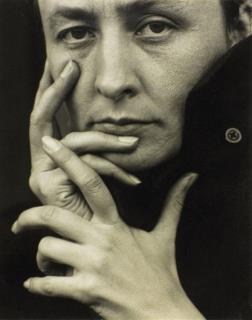
photo by Alfred Stieglitz
I hate flowers – I paint them because they’re cheaper than models and they don’t move.
~ Georgia O’Keeffe
photo by Alfred Stieglitz
You are Life passing through your body, passing through your mind, passing through your soul.
Once you find that out — not with logic, not with the intellect, but because you can feel that Life — you find out that you are the force that makes the flowers open and close, that makes the hummingbird fly from flower to flower.
You find out that you are in every tree, you are in every animal, vegetable, and rock. You are that force that moves wind and breathes through your body.
The whole universe is a living being that is moved by that force, and that is what you are.
You are Life.
– Don Miguel Ruiz, The Mastery of Love
The clerk at the check-out counter at Safeway asked if I had any plans for this weekend. I thought about it a second, wondering if this weekend was special – a holiday or something.
Finally I said, “No. How about you?”
“Well, I have the weekend off. That’s pretty good.” He smiled.
I smiled. Quick little connect.
On the way out to the car I thought about these connections and my plans and what the days ahead look like. How much did I want to share with Safeway guy? How much did he want to share with me?
In these days of the “town as crier” where we all have a little something to say and a forum to share it in, we are not as private as we once were. We are more obviously connected.
Many of us hide. Or we don’t know what to say, or how to act when someone says something. We have such a hard time communicating. I know I do. But it is worth the effort. As I open up, I see things returning to me in every direction of thought. This reciprocity is an important part of the artistic process for me. Since I don’t have to “be” alive, then all I have to do is share my life. I am not worried about my privacy being invaded. There isn’t much I can do about that anyway, and for the most part people are respectful. We all have a visible line between society and solitude.
Here is a quick glance at my calendar and agenda for the next few months – just so you can see.
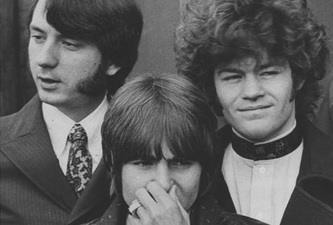
I am playing a short set – 4 or 5 songs — with Lambchop at the invitation of Kurt Wagner on May 4th in San Francisco at the Great American Music Hall. And I am in the studio finishing up some tech stuff – building another computer – and writing and recording new music. I have put together a book proposal about MTV the Music Video and my mother’s invention of Liquid Paper. I am reconfiguring the Monkees special we did in ’98, and I connected with John Ware about reforming what is left of the First National Band for a short live tour doing the RCA material.
Let’s see – that’s pretty much it.
I live alone with Dale, my dog. I write and play and there are deep currents that run in my life about Life the Universe and Everything. (I miss Douglas every day.)
I am busy and active, but a little removed from society.
I am posting this on FB and Google+, my chosen SM voices, because I think it is important to connect, and I like knowing the guy at the Safeway is happy about his weekend off.
There is the dark furtive element in all of us.
But there is also the natural shine.
Standing alone in the presence of something wonderful I am filled with joy and wonder. At that moment I think I know what divine love is – that place where all of us just stand and love something like a sunrise or a forest or an ocean view – the light in the eyes of a child – or a clerk.
We do not need to gather or consume or objectify this moment. We do not need to respond or comment to complete the moment. The moment is complete of itself, and there is great satisfaction and happiness in that — our own light.
Selfless.
Effulgent.
Connected.
Or as MBE has it: “Love meeting no response, yet still remaining love.”
It is why I sing.
I’ll see you on May 4th in SF if you are around there. Great American Music Hall.
ITMT, if you get a chance please stop by Videoranch and browse the stuff. www.videoranch.com. Nothing new right now, but we are happy to have you visit, and wave.
And we are happy to know what you would have us know.
~ Michael Nesmith, April, 2012
“Neither a borrower nor a lender be; for loan oft loses both itself and friend, and borrowing dulls the edge of husbandry.” – Shakespeare
Until recently, I had never read the rest of that quote, “…borrowing dulls the edge of husbandry.”
Back in those days of Shakespeare, essentially every land owner or lease holder was engaged in husbandry (raising animals and doing all the things it takes to support that endeavor). Girls leaving home (hopefully) either did domestic work or “took a husband.” Their house management work and labor-unit-making (baby) services were critical and extremely valuable, so the “husbandry practitioner” paid a dowry to her parents. Many marriages were little more than financial transactions, but the few alternatives to those transactions were very grim indeed.
So, of course the self sufficiency skills required of both men and women to do husbandry and householder work would be “dulled” if the husband borrowed money. The safe and sure route was to either make everything one used or trade for it.
Creating a wide spectrum of items needed for daily life developed a broad skill-set which prepared people for most any eventuality. When necessities couldn’t be created from available skills or materials, people traded. Trading required giving up something of REAL value, so it was usually done only when something was REALLY needed.
Borrowing goods or help from a neighbor wasn’t the same as borrowing currency from a moneychanger. Borrowing a tool from a neighbor in exchange for the understanding the neighbor could borrow what they needed at a future time was still considered trading.
Without these “do it yourself or make do” habits, it stands to reason that over time, a debt-based society would be chocked full of “dullards” who have no skills for self-sufficiency. Most modern people posses nothing of real value to trade except their limited time and they trade what little time they have for promissory notes which they most often trade for things they don’t REALLY need.
There are few if any true “husbandry practitioners” left. Everyone is in some way now reliant on the corporate state. We’ve given up our land, sent our animals to factories, forgotten if we ever knew how to build, grow, or refine anything, and stretched out our wrists to receive the digital shackles of tax IDs.
Self-Sufficiency? It’s a miracle most people know how to tie their shoes.
Husbandry promotes self-sufficiency, independence and equality, whereas debt converts citizens into subjects.

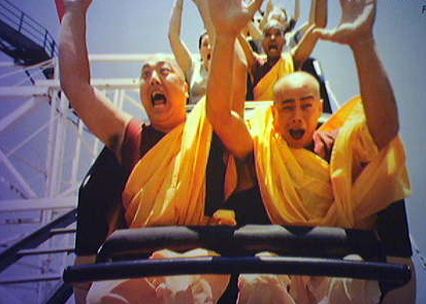
If self-abnegation is easy, then it’s a false death. If it stops at Saturday morning yoga, Starbucks, and a buddha statue from Ikea, then it is worse than everyday selfishness.
Slavoj Zizek rightly (I think) identified what he calls “buddhism” as a perfect complement to capitalism: after a day of robbing widows and orphans, you meditate and empty yourself of the stress you rightly and naturally feel. The next day, you return more cutthroat than ever.
Such violence-affirming “buddhism” cannot be buddhism at all. Meditative methods can be used for opposite ends: one can become less and less selfish (emptier), or one can become more and more selfish (“full of oneself”). The “buddhist economics” of E.F. Schumacher is a decent example of how buddhism is not strictly speaking the complement of capitalism, but how pop-buddhism IS a perfect pairing.
The void is terrible and mundane, universal and particular. It is the shaped void in which I find myself in every single moment. As Aldous Huxley said, a soldier can suspend his everyday sense of ego and perform superhuman acts in moments of crisis. The difference between a soldier and a saint is that a saint sees EVERY moment as a terrifying crisis. The saint/sage falls outside the conventional morality of the polis. Where Aristotle said that the man who lives outside of the polis is “a beast or a god” he should have said beast/god. From the vantage point of the polis, a sage is impossible to pin down.
The feral divinity of those who do not conform to conventional political norms appear as both bestial and celestial, profane and holy. If a saint were not both vilified and deified, he would not be a saint. Why do you think Jesus is so controversial? He was a beast/god who met each moment with a ferocity which appeared both violent (overturning tables and expelling the moneylenders from the temple) and pacific (turning the other cheek).
But this is why the prophets of old were cut in half with wooden saws, why Jesus was crucified, and why Socrates was executed — and why those who speak truth to power will continue to be hated.
If Aristotle is to be taken seriously and taken ON HIS OWN TERMS, then, since he denies that universals exist “elsewhere” and that everything is always a particular instantiation, then where he speaks of God as “thought thinking thought” it is always SOMEONE’s “thought thinking thought” and not some floating abstraction. As Heidegger said: “Being is always and in every case mine.” It took me a long time to come to this realization since I came to Aristotle with far too many theistic prejudices.
God, as the fundamental unifying principle, is the Absolute. And the Absolute, which has no rival, is its own opposite: God is also the fundamental differentiating principle. And what differentiates/unifies more than Thought itself? God is MY thought and YOUR thought. God is consciousness itself, which creates the world around us, separating the heavens from the earth and yet holding them together.
Every moment is an act of creation, and is also an absolutely unique crisis. This can never be the casual pop-buddhism of the new age hipster.
~ Stewart Kahn Lundy
This being human is a guest house.
Every morning a new arrival.
A joy, a depression, a meaness,
some momentary awareness comes
as an unexpected visitor.
Welcome and entertain all!
Even if they’re a crowd of sorrows,
who violently sweep your house
empty of its furniture,
still, treat each guest honorably.
He may be clearing you out
for some new delight.
The dark thought, the shame, the malice,
meet them at the door laughing,
and invite them in.
Be grateful for whomever comes,
because each has been sent
as a guide from beyond.
~ Jalal ad-Din Rumi
We were all asked the same question when we were kids, “what do you want to be when you grow up?” And, I think we were all asked the wrong question. It was obviously a false question, because even when we’re old we can’t answer it.
The question shouldn’t have been what do you want to BE, it should have been what do you want to CREATE? The truth is we are who we are and there is no other person or thing we can go “be.”
But, since we’re asked the same false question over and over through the years by our parents, our teachers and our employers, we continue to ask ourselves the same false question, even if it’s only in our minds.
No more. Now that we’re grown up we can answer the original question truthfully; I want to be ME when I’m grown up and guess what? I am! Now, what do I want to create?
And, the answer to that question is as boundless as the world around us and as easy to answer as planting a flower or helping a friend.

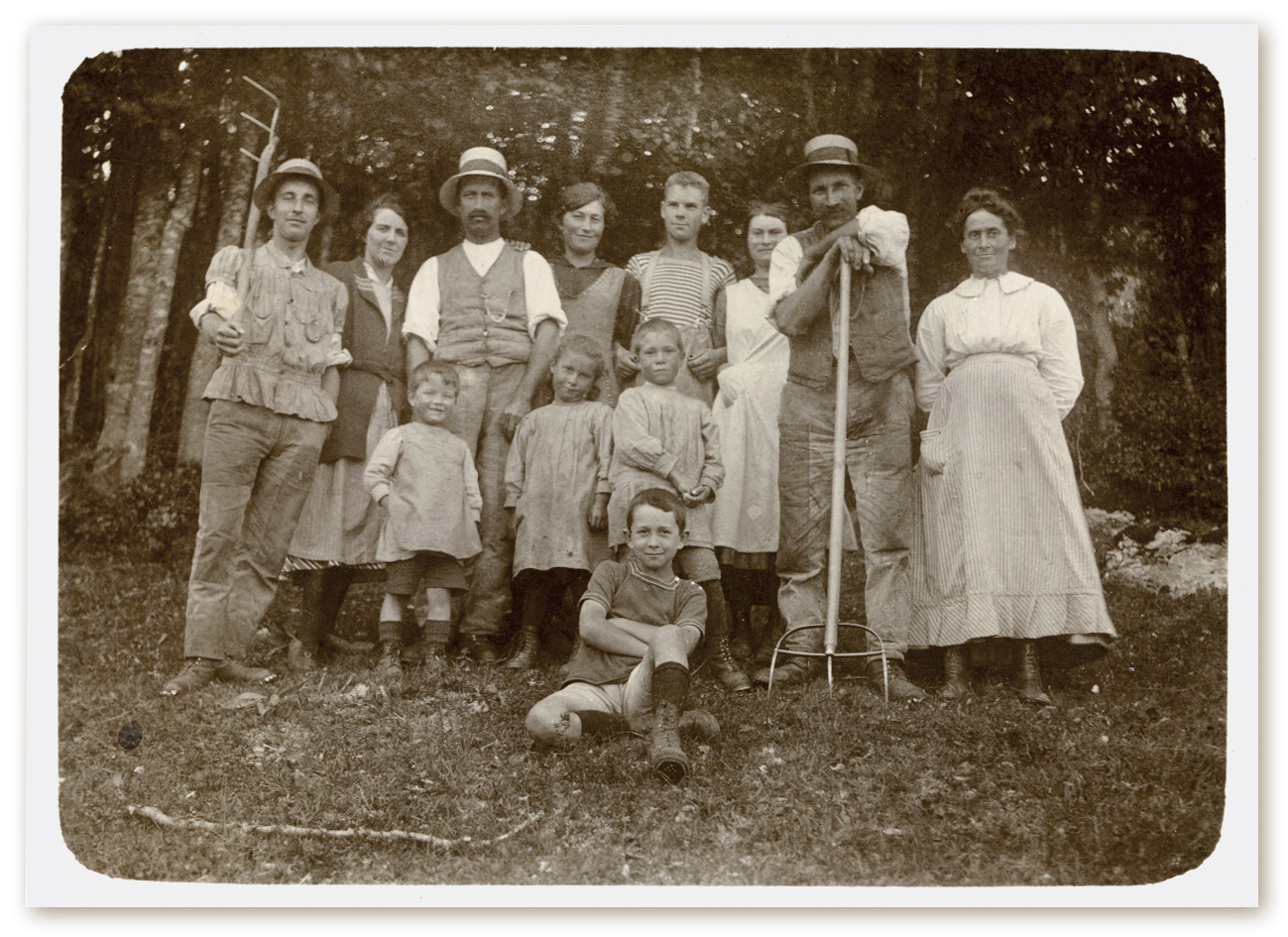
September 1940. Jack Whinery, Pie Town, New Mexico, homesteader, with his wife and the youngest of his five children in their dirt-floor dugout home.
Whinery homesteaded with no cash less than a year before and does not have much equipment; consequently he and his family farm the slow, hard way, by hand.
Main window of their dugout was made from the windshield of the worn-out car which brought this family to Pie Town from West Texas.
4×5 Kodachrome transparency by Russell Lee, Farm Security Administration.

The celebrity, the spectacular representation of a living human being, embodies banality by embodying the image of a possible role. Being a star means specializing in the seemingly lived; the star is the object of identification with the shallow seeming life that has to compensate for the fragmented productive specializations which are actually lived. Celebrities exist to act out various styles of living and viewing society unfettered, free to express themselves globally.
They embody the inaccessible result of social labor by dramatizing its by-products magically projected above it as its goal: power and vacations, decision and consumption, which are the beginning and end of an undiscussed process. In one case state power personalizes itself as a pseudo-star; in another a star of consumption gets elected as a pseudo-power over the lived. But just as the activities of the star are not really global, they are not really varied.
— Guy Debord, The Society of the Spectacle.

The traditional value system, originated out of long and tragic human experience, was encapsulated in traditional religion.
As religious mythology, cult and ritual were demolished by critical rationalism the values of which these were the virtually sole and fragile carriers also suffered, came into disrepute as goody-goodyness and were insensibly superseded by the harsh values of success, of which the mass media stood as the principal guarantors.
Instead of the clergy now defining values for society the job was taken over by half-literate, often personally demoralized editors and publishers.
Religion, in the process, was reduced from a vital, widely shared world view to routine churchgoing on the part of the less educated. As the healthy baby of traditional values was thrown out with the dirty bathwater of myth and cult, the only repositories remaining for traditional values were the university and traditional philosophy, neither of which had much impact in the daily lives of people and both of which were strangers to the editors and publishers of the mass media, nearly all militantly ignorant men.
~ Ferdinand Lundberg, 1968

 Kinnaird